Did you know that weather-related delays affect 45% of construction projects worldwide every year? That staggering statistic underscores just how vulnerable construction operations are to harsh weather, particularly cold. In cold-weather construction projects, the risks multiply: worker productivity drops, materials behave differently, and timelines and budgets quickly blow. This is where portable heaters become not just helpful, but essential.
In this post, we’ll explore why portable heaters are critical for construction in cold climates, how they support productivity and quality, the key benefits and best practices, and what to look for when deploying them on your job site. By the end, you’ll understand how the right heating strategy can keep your project moving smoothly even when the mercury drops.
Cold weather and construction — the big challenges
Cold temperatures bring multiple challenges to construction sites:
- Worker productivity declines, cold exposure, more frequent breaks, slower pace.
- Materials and equipment don’t behave as expected — for example, concrete cure times increase, adhesives may not set properly, and machinery may suffer from thickened fluids.
- Schedules get extended — one firm reports that typical winter conditions can consume 23-28 weather-related delay days on projects.
- Budget impacts mount — delays, rework, extra equipment, and worse productivity all raise costs.
When a construction site isn’t properly prepared for cold weather, the domino effect is substantial. That’s why having a strategy for warming the work environment is key, and portable heaters play a central role.
How portable heaters solve critical cold-weather problems
Deploying proper portable heaters on a cold-weather construction project can address many of the risks listed above. Here’s how:
Targeted warming of workspace
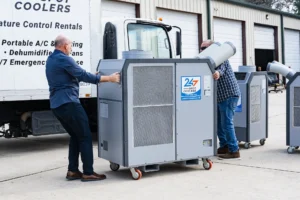
Portable heaters allow you to raise ambient temperature in enclosed or semi-enclosed areas (e.g., a temporary tent over a slab pour, a partially framed building, or a materials staging zone). That means
- Workers can stay warmer, maintain dexterity and productivity
- Materials and equipment are protected from extreme cold
- Time-sensitive tasks like pouring concrete or installing adhesives can proceed under better conditions
Protecting temperature-sensitive materials & processes
On cold construction days, you may need to:
- Wrap or heat cure concrete so that freezing doesn’t impair strength gain
- Keep adhesives, coatings or sealants within their usable temperature range
- Ensure machinery and tools perform reliably (fluids, batteries, hydraulics suffer in extreme cold)
Mitigating schedule and budget risk
By creating a warmer work zone with portable heaters, you can:
- Maintain workflow rather than halting due to too-cold conditions
- Avoid loss of productivity that accrues when cold slows every task
- Reduce need for rework caused by material failures or improper curing
- Keep your project timeline tighter and your budget more predictable
Key benefits of portable heaters for cold-weather construction
Here are the major benefits of integrating portable heaters into your site strategy:
- Improved worker comfort and productivity: A warmer zone keeps crews working efficiently.
- Quality assurance for materials: It ensures that concrete, coatings, adhesives, and other temperature-sensitive items perform as intended.
- Reduced schedule risk: Rather than stopping work or moving tasks to warmer months, you can continue through colder periods.
- Cost avoidance: By maintaining productivity and avoiding rework, you avoid hidden costs that come with cold-weather delays.
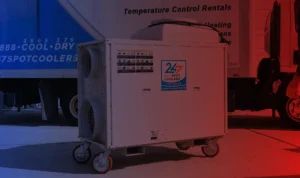
- Flexibility and responsiveness: Portable heaters can be moved or redeployed as needs shift across phases of the project — as referenced for spot heating, large scale construction heating, outdoor & event heating.
Best practices for deploying portable heaters effectively
To maximize the benefit of portable heaters on cold-weather construction projects, follow these best practices:
- Plan ahead: Determine which zones will require heating (materials staging, work tents, slab pours, etc.) and schedule heater deployment accordingly.
- Match heater type to application: Electric, direct-fired or indirect-fired heaters each have pros/cons depending on ventilation, indoor vs outdoor, size of space.
- Ensure proper ventilation and safety: Especially for combustion-type heaters, ensure exhaust is handled and fresh air is supplied.
- Monitor temperature and conditions: Track ambient temps, slab or material temps, and adjust heater output or placement accordingly.
- Integrate with material schedules: If you’re pouring concrete, accelerate the pour while the heater is operational; for coatings/adhesives, apply when temps are within manufacturer requirements.
- Optimize cost: Use heaters only where needed, combine with insulation or tenting to avoid over-heating large open volumes unnecessarily.
- Maintain equipment: Ensure heaters are maintained, fuel (if applicable) is available, and backup units are ready in case of failure.
- Document the use: From a quality and contractual perspective, keep records of when and how your heated zones were set up to demonstrate that you mitigated cold-weather risk.
Where portable heaters are particularly indispensable
Here are specific scenarios on site where portable heaters provide disproportional value:
- Slab or footing pours in cold weather: Prevent freezing, ensure proper cure strength.
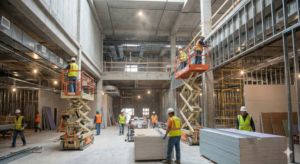
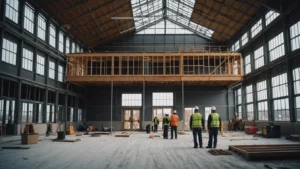
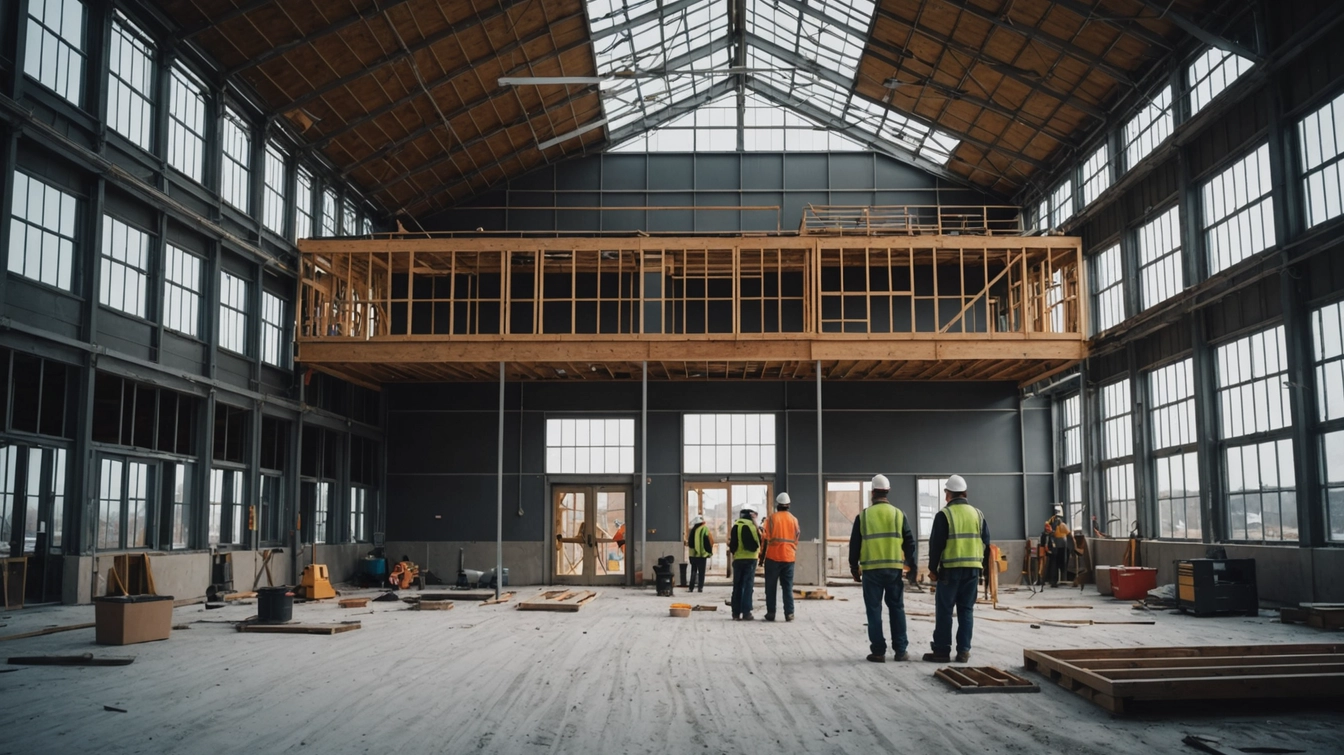
- Partially enclosed structural work: When a shell is up but insulation/heating isn’t yet active.
- Materials and equipment staging areas: Protect items sensitive to cold, keep tools ready.
- Temporary work tents or scaffolding areas: Keep crews comfortable, avoid heat loss.
- Outdoor tasks during cold snaps: Provide localised heat to allow work to proceed rather than waiting for warmer days.
Don’t get caught in the cold
Cold weather adds a layer of complexity, cost and risk to construction projects. The statistic at the start, nearly half of all construction projects globally experience weather-related delays, gives you a sense of how important it is to have mitigation strategies in place. Portable heaters are one of the most effective tools in the cold-weather construction toolkit.
When you deploy portable heaters thoughtfully, aligning them with your schedule, using the right type, ensuring safety, and optimizing their usage, you can keep your project moving, protect quality, stay on budget and avoid the disruptions that cold brings.