When cold weather hits a jobsite, warehouse, event tent, or temporary workspace, heat becomes more than a comfort issue. It becomes a productivity and safety necessity. One of the most common mistakes in temporary heating projects is choosing equipment that is either undersized or oversized for the space. Proper temporary heater sizing depends on three main factors: BTU requirements, make-up air, and insulation quality. Understanding how these work together will help you select the right portable heater, air heater, or tent heater size for your application.
Why Temporary Heater Sizing Matters
An undersized heater struggles to keep up, runs constantly, and still leaves cold spots. An oversized heater can create uneven temperatures, waste fuel, and introduce moisture or ventilation issues. Correct temporary heater sizing ensures:
- Consistent, comfortable temperatures
- Efficient fuel or power usage
- Reduced condensation and humidity problems
- Safer operation in enclosed or semi-enclosed spaces
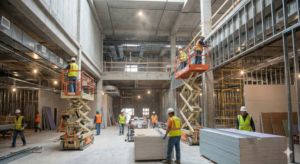
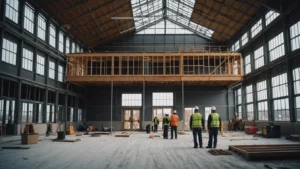
Whether you are heating a construction site, a temporary structure, or an outdoor tent, sizing is the foundation of an effective heating plan.
Understanding BTU Requirements
BTU stands for British Thermal Unit, which measures the amount of heat needed to raise one pound of water by one degree Fahrenheit. In practical terms, BTUs tell you how much heat output a heater can deliver.
To estimate BTU requirements, you need to know:
- The length, width, and height of the space
- The temperature difference between inside and outside
- The level of insulation in the structure
A simplified formula often used is:
BTUs per hour = Cubic feet of space × Temperature rise × Insulation factor
Step 1: Calculate Cubic Feet
Multiply length × width × height to get the volume of the space.
For example, a 40 ft × 30 ft × 12 ft area equals 14,400 cubic feet.
Step 2: Determine Temperature Rise
If the outdoor temperature is 30°F and you want to maintain 65°F inside, the temperature rise is 35 degrees.
Step 3: Apply an Insulation Factor
- Well insulated space: 0.5 to 1.0
- Poorly insulated space: 1.0 to 1.5
- No insulation or open structure: 1.5 to 2.0
Using our example with poor insulation:
14,400 × 35 × 1.2 = 604,800 BTUs per hour
This means you would need a heater, or multiple heaters, that can deliver roughly 600,000 BTUs per hour to maintain that temperature.
The Role of Make-Up Air
Make-up air is the fresh air that replaces air being exhausted from a space. Many temporary heating setups, especially those using indirect-fired air heaters, require proper ventilation to operate safely. If warm air is being vented out and replaced with cold outside air, your heater has to work harder to maintain temperature.
Key considerations include:
- How much air is being exhausted from the space
- Whether doors are frequently opening and closing
- If ventilation fans or dust control systems are running
If your space has high air turnover, you may need a larger heater to compensate for heat loss. This is a common issue on construction sites and in industrial tents where equipment and personnel movement is constant.
Insulation and Heat Retention
Insulation is one of the biggest variables in temporary heater sizing. Even the most powerful portable heater will struggle in a space with no insulation and constant air leaks.
Here is how insulation affects heater selection:
- Well insulated buildings: Smaller heaters can maintain stable temperatures with less fuel.
- Partially insulated structures: Moderate heater capacity is needed, and heat loss should be expected.
- Tents and temporary enclosures: These often require significantly more BTUs due to thin walls and air gaps.
When determining tent heater size, always assume higher heat loss unless the tent has insulated liners or double walls. Wind exposure can also increase heat loss dramatically, so outdoor conditions must be factored in.
Choosing the Right Portable Heater or Air Heater
Once you have estimated your BTU needs and considered make-up air and insulation, you can select the appropriate type of heater.
Portable Heaters
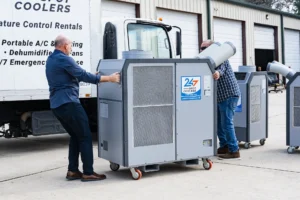
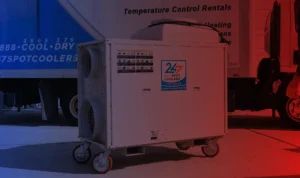
A portable heater is ideal for spot heating, small rooms, or areas where flexibility is needed. They are easy to move and quick to deploy but are generally lower in BTU output. These work well in:
- Small offices or trailers
- Break areas
- Enclosed workstations
Air Heaters
An air heater, often ductable, is designed to heat larger spaces evenly. These are commonly used in:
- Warehouses
- Construction sites
- Industrial buildings
- Large tents
They distribute warm air through ducts, which helps reduce cold spots and improves overall efficiency.
Tent Heaters
Selecting the right tent heater size is critical for events, storage tents, and temporary shelters. Tents lose heat quickly, so you typically need more BTUs than you would in a permanent structure of the same size. Indirect-fired heaters are often preferred because they provide clean, dry heat and allow exhaust gases to be vented outside.
Common Sizing Mistakes to Avoid
Even experienced planners make mistakes when estimating heating needs. Watch out for these common issues:
- Ignoring ceiling height: Tall spaces require more heat due to greater air volume.
- Underestimating air leaks: Gaps, open doors, and seams can drastically increase heat loss.
- Not accounting for make-up air: Ventilation requirements can double heating demand in some cases.
- Assuming all heaters perform the same: Two heaters with similar BTU ratings can perform very differently depending on design and airflow.
Practical Tips for Accurate Temporary Heater Sizing
- Measure your space carefully and include height, not just square footage.
- Be realistic about insulation quality, especially in tents and temporary structures.
- Factor in how often doors are opened and how many people or machines are inside.
- When in doubt, slightly oversize and use thermostatic control to regulate output.
- Use multiple smaller heaters instead of one large unit if the space has separate zones.
Wrapping It All Together
Proper temporary heater sizing is not just about picking the biggest unit available. It requires a clear understanding of BTU requirements, make-up air, and insulation conditions. Whether you are choosing a portable heater for a small workspace, an air heater for a large facility, or determining the correct tent heater size for an event or jobsite, accurate sizing leads to better comfort, lower fuel costs, and safer operation.
By taking the time to evaluate your space and conditions, you can select the right heating solution and avoid the common pitfalls that lead to cold spots, wasted energy, and frustrated crews.